

David Coletto: First-time home buyers are saying, “Look, I’ve adjusted my expectations. I’m planning for a smaller home. I’m open to a different property.” The demand, again, that the market is asking for, isn’t aligning with what the supply is.
Shaun Majumder: What does homeownership mean to Canadians? Man, there’s been a lot of talk about this over the last few years. It’s an ongoing issue. Obviously, homeownership, affordable housing is top of mind on every single Canadian, all the governments, top to bottom. How do you break through all the talk? You’re hearing all these rumors, you’re hearing all these misconceptions, or are they real? We don’t know.
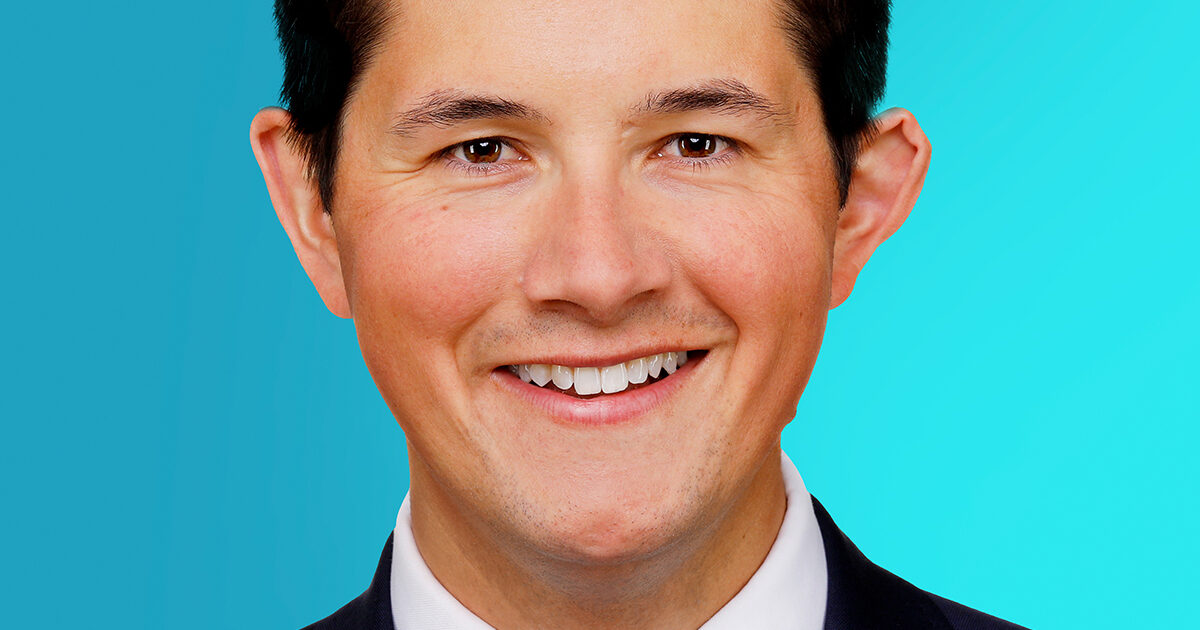
Today, we’re going to find out what the data says, which is great. Today, on the show, we’re being joined by David Coletto. He is the founder and CEO of Abacus Data. He goes deep. Along with CREA, Canadian Real Estate Association, they have just published a report, which he’s going to tell us all about right now. Here’s my conversation with David Coletto.
This is exciting. Today, I’m being joined by influencer David Coletto. Now, hold on. I know when we hear the word influencer, we might be thinking social media. No, but David Coletto is recognized as one of the top 100 most influential people in Canadian politics in 2024, founder and CEO of Abacus Data. It’s a great name, by the way. It’s a great brand. At what age did you say to yourself, “When I grow up, I am going to be so immersed in data that I am going to be considered a pseudo Jedi in Canadian politics?” What age did you have that dream?
David: Yes, it’s a weird one. I get that asked all the time, Shaun. Nice to see you. Look, I don’t know when the light bulb went off because I don’t think anyone really dreams to be a pollster. I do recall always loving numbers and using numbers to embed myself or become obsessed with things. I was the kid growing up in Toronto whose parents got the Toronto Star, and I’d come into the house when people still got newspapers. At the back of the sports section, there was the box scores for the baseball games. I would just sit there for an hour and consume it all.
You’d ask me what the batting average of some player was on some obscure team, and I would know. I think when I became interested in politics, that interest in seeing numbers as a way to describe politics became followed. It’s a cool way to see the world, right? I think I get to ask questions to lots of people across the country all the time on everything.
When you pull it all together, you start to make sense of why things are happening, why people behave the way they do. I’ve always been interested in that, regardless of whether it’s politics or housing or what bubblegum people prefer. It’s a really interesting line of work.
Shaun: As a pollster, when you think about there’s so many left-wing pollsters, there’s right-wing pollsters, there’s all this twisting of information these days. How do you guys manage that in terms of wanting to make sure that you’re just basing everything on data and not opinion? How do you find that balance, especially in today’s world, where we don’t know half of what we’re looking at is real or not real or biased or unbiased? How do you guys deal with that?
David: The first step is to recognize that we have bias. You can’t completely eliminate it. Can you check that? Can you challenge your assumptions and your conclusions? I’m doing that all the time. Knowing who I am, where I grew up, what my background is, does put a perspective on everything. I’ve also made the decision—I’ve founded this company and been doing this work for over a decade and a half—that I would not do political work.
Abacus Data does not do any partisan political polling for any political party in Canada at the federal or provincial level. That allows me, I think, the ability to really look at things, when it comes to politics, as objectively as I can. Then I really work hard at it. I think it’s never perfect. As I said, I do have a bias that I bring, but it’s not a partisan one. I know a good week in my world is when both liberals and conservatives point at me and say, “He is the worst thing since–” because that tells me, when you like my polls, you think I’m on your side. When you hate them, you think I’m biased. That changes as the polls change.
Shaun: In terms of data, how do you respond to numbers don’t lie?
David: I think, in my world, where the numbers we generate are from questions we ask people, that they can lie. You can ask a question in a way that gets an answer that you want. You can take a number and spin it in a way that’s not really, I think, a good way of interpreting it. Interpretation of numbers is where you get disagreement. You can get different perspectives saying that number means different things to different people. I do think the numbers, depending on your perspective, can lie.
What I try to do is, again, ask fair questions, ask them in a way that thinks about the best practice around survey design, questionnaire development, all the boring stuff that nobody wanted to take in university, comes to bear when I do my work and my team does my work on a regular basis. I think anyone consuming the poll we’re going to talk about today, or any poll, just needs to keep in mind who did it and what is the reputation of the person and the company that does it, because it does matter.
Shaun: Here we are on REAL TIME. Our focus, obviously, is in the world of real estate. You recently put out this report around home ownership. This is really, really interesting right now because, if you listen to all the noise, if you’re on social media, you’re hearing pundits talk about X, Y, and Z. We’re in a housing crisis. The excitement for young people envisioning themselves owning a home one day is way down, depending on which side you’re talking to.
That one there seems to be the one that has been breaking through the most, I think, at least, what I’ve been seeing. This report addresses some of that stuff. First of all, tell us about what this report is and what its focus has been.
David: Last fall, in September of 2025, we partnered with the Canadian Real Estate Association and did a large national survey. Almost 4,000 Canadian adults were interviewed to explore a number of questions, one of them being, what does home ownership mean to people? Why do they want to still have it? How are, particularly younger Canadians’, expectations changing?
I think what we learned, from a big-picture perspective, is that I think that question of home ownership is in contest. There are people who are questioning whether they’ll be able to do it, but overwhelmingly, younger non-owners still want to own a home. It’s a desire that they hold deeply. That was the intent, was just to really test that narrative as you described, that is this something that people are losing interest in?
Is skepticism, maybe even pessimism, rising? What can we do to solve for that? What can government particularly do to help make the dream, the desire, or the hope for owning a home one day for more Canadians real?
Shaun: I remember when I first started thinking about wanting to buy a home, I had a guy who was my mentor in business back in the day. He did that old-school thing, save up, 20% down payment, take everything you make for a full year, blah, blah, blah. Boom, you put your down payment on your house, and you’re in, and you go. It was much more achievable, I think, back then. What was the sentiment you found, especially in that younger demo? There’s the report, but also what are you hearing generally about what would be the alternative for some of these young people?
David: Well, the first thing to say is it shows up when you either ask them in surveys, or I talk to them. I used to be a prof at Carleton. My class of 20-somethings really thought about housing all the time. I think it’s come to define so much of the experience of younger Canadians. Either they’re just trying to pay the rent or, to your point, figure out how to get ownership, become a homeowner. If they are a homeowner, how do I hold onto it? Because it feels difficult given all the things you described around employment security and rising and falling interest rates and the market’s up or down, what is happening, and the global context that that’s all happening.
What we know from this survey is this: close to nine in 10 younger Canadians say, “I want to own a home.” There is some, to your point, skepticism around whether that desire is going to be achievable. We’ve tracked this with CREA over the years that shows that, yes, the dream, that desire still exists, but there is increased friction in it.
People are looking around and saying, “Look, I’ve been waiting for years. I’ve been doing the things you told me to do. I’ve been saving as much money as I can, but every time I save, the price goes up, or it becomes harder to get, or the rules change on how much I need to save in order to get a mortgage to then buy a home. Or look, the housing’s not sufficient to what I need. I don’t want a 500-square-foot condo. I want somewhere where maybe I have a partner, or I want to have a family.”
All of these variables point to, one, a very clear North Star that still exists, that is still part of, I think, the Canadian dream, let’s say, but a lot of doubt about whether the system all around people is going to make it harder for them to make that possible.
Shaun: Of those factors, what was top of mind for young people in terms of the friction part? Was it interest rates? Was it, was there enough inventory? Was it the size of house, the kind of house that they envisioned they wanted to put themselves in? What were those factors?
David: Well, I think they really point to some of those variables that have existed for a while, their ability to save, the down payment, the interest rates, the cost of building homes, but what this study really identified, particularly those that really were focused on wanting to achieve this goal, was, “Look, I don’t think we’re building, one, enough homes, and two, I don’t think we’re building enough of the kind of homes we need.”
The so-called missing middle of the housing market. The small condos don’t fit, and the detached homes are too big and out of reach, but we’re not building enough in between. The stuff that is in the kinds of neighborhoods I want to live in might be slightly larger, might have certain amenities or features that I need for the lifestyle that I want, whether it be, again, having a partner in the home, having something that I can afford, and having enough space to maybe have a child or to have a dog or whatever it is you want in your life.
It’s that missing middle that really stood out, that we’re building housing. People understand it. They see the governments are engaged in this, but not enough homes that people can actually live in long term, is how I think a lot of younger people and Canadians generally are feeling about the kinds of housing we’re building.
Shaun: The kinds of housing, that’s interesting. In the activation of building these new homes, I would assume obviously the governments plays a big role, but there are many barriers to that happening. What are the barriers that you see in terms of actually activating this idea of like, “We’re going to build 6 billion new homes in Saskatchewan alone?”
David: I think from the public’s perspective, they would say that, one, it’s all three levels of government, by the way, and in some ways, developers who don’t have the incentives to build the right kinds of homes. I think half of Canadians, for example, say that municipal zoning rules are holding back that missing middle, that there are–
Shaun: In what way? How so?
David: Think of a municipality, a city, a small town, whatever, basically having rules on the books that says, “You cannot build a triplex in this neighborhood, in part because people don’t like it or they want to keep the ‘character’ of the neighborhoods the same. This is only for detached homes.” We’re seeing changes. We’re seeing a lot of pressure put on municipalities to change those zoning rules, but people recognize that this so-called NIMBYism, Not In My Backyard. The idea that people who live in certain neighborhoods, maybe with a certain type of home, don’t want to see mid-rise buildings built, don’t want to see more density.
It’s density that often leads to these missing middle type housing, whether it’s being like a townhouse or a triplex or a low-rise multiplex kind of home. I think we have seen over the last number of years that more and more attention has been put right down to the local level in government to change these rules and allow for more of this to happen? What we’ve seen at every level of government, provincial, federal, moving up, is how do you create the incentives for those municipalities to change the rules and to make it more affordable to build those kinds of homes for the developers that we talked about earlier to do it?
Obviously, these are businesses. They’re not going to build a home they can’t make money on. Right now, because of the cost of land and the cost of labor and the cost of getting loans for many projects, it’s just really expensive to build an actual home. Those are the things that I think public policy advocates like CREA are trying to solve for.
Shaun: Right. When we think of homeownership and the dream of homeownership, I’m sure, for my idea– I grew up in a tiny trailer in small-town Newfoundland, with my mom and my wiener dog and my sister, Ronnie. It was actually how I got introduced to CREA because I talked at their conference. It was really fun to go through every single place that I had lived ever since I was a baby, and go back and look at all these spaces and look at all that.
The idea of what it is that makes me, “comfortable,” or what I would imagine I would like to have in a house, has changed so much over the years. What are you seeing in terms of the desire from young people, what they thought they wanted, and then when they realize, oh, maybe I need to adjust this a little bit. Are they giving up on the home that they wanted, or is there some adaptability happening?
David: I think there’s two things happening. One is the meaning of ownership is evolving, and expectations about what I can or should or need to buy are being reset in real time. Let me explain the first one. When it comes to the meaning of ownership, I think the simple way to think about it, it’s less about the so-called dream home now and more about just having a home. For a younger Canadian who’s starting this journey and they’re looking at the idea, “I do want to own a home,” it’s not so much as a must-have life achievement as opposed to, “You know what, it’d be really nice to have that stability in my life.”
When that mindset shifts, and I think it’s fair to think about this, not as this entitlement among young people who– I always hear it all the time when slightly older Canadians tell me, “I had to do all these things before I could buy a home.” Well, guess what? Young people are also doing all those things, but it is actually harder today in order to achieve it. The realism in young people is actually not unrealistic. It’s actually, they’re saying, “Look, I’m actively adapting.”
First-time home buyers are saying, “Look, I’ve adjusted my expectations. I’m planning for a smaller home. I’m open to a different property. I’m willing to move to a less desirable community than maybe I want to live in because I see the market, I see the world.” Owning a home is still that important that those expectations are changing. The demand, again, that the market is asking for isn’t aligning with what the supply is, and that’s where this mismatch between that missing middle and this demographic, I think, really exists.
Shaun: When you think about a young person, think about, “Do I even need to purchase a home?” Are people saying, “Well, maybe I can save a lot of money and travel by renting for the rest of my life?” Is that an actual thing that I’ve heard people talk about?
David: It is a thing, but it’s not the majority or anywhere near the majority view. There have always been people, by the way. Not everybody owns a home. Not everyone has always owned a home. I do think that, at some point, there may be some people who realize, I’m not going to be able to own a home, or it’s not that big of a priority, but that’s not most people. Most people say, “I’d like to own a home. I’m doing the things I think I need to do to get that home. I think it’s important.”
We know this, by the way. We did research, and CREA has done quite a bit of research to show the social benefit of homeownership itself. The things like you’re much more likely to engage with your community when you own your home. You’re more likely to have a family, which, by the way, Shaun, we need more people to have kids, not less, because our fertility rate’s very low and we’re not growing our population.
People feel more secure and safe. They’re willing to take more risks when they have that anchor in their lives. The social benefit of homeownership is pretty well known. Some people believe the economic benefit is particularly true. We see data that suggests those younger Canadians, say, think of millennials, those now in their 30s and 40s, those who own their home are substantially better off financially in terms of their wealth, in terms of a whole bunch of variables, than those who don’t.
It’s actually encouraging more inequality. There’s this gap between those who can buy and those who don’t. What I think COVID did, like so many other things, is it reset, in some ways, where we could live. If you were able to work from home, it meant you could live farther away, maybe entirely from where you work. I know lots of folks that have moved from central Canada to where you are, Shaun, in the East Coast because it was more affordable. Better lifestyle in their minds, and they could do it. They could work.
That’s shifting back now as more and more employers are asking or forcing their employees back into the office. Again, at one point, people could drive as far as they could to afford something; that pressure’s back on now. I think we are seeing, again, that demand for this appropriate housing is going to continue to increase and put pressure on policymakers to adjust how the incentives exist and will create the space, I think, for this kind of housing to be built because this is a large generation still who are asking for these kinds of changes.
Shaun: We’re going to talk more about the missing middle in a bit, but I am curious, as you’re talking about people having to come to the realization, “Maybe I have to move outward from where I work,” when I think about downtown Toronto, I know everybody’s all about Toronto, but Toronto is a place that I can relate to because I moved from Newfoundland to Mississauga. I was on the outskirts of Toronto, and I would always come downtown.
This is way back in the ’90s. I always remember being like, I rented an apartment downtown Toronto because that’s where I had to be. It was amazing. I lived downtown. My career launched downtown. I didn’t have to buy a car. I didn’t own a car. I could get around downtown. It was great. Since I left, that has changed dramatically, I think. Is there still that hot desire by young people to be like, “I want my own pad downtown, condo, cool, hip, in the mix, urban lifestyle?” Is that getting hotter, or is it getting less, and more people are thinking, Brampton, Oshawa, out, out, out?
David: Look, I don’t think there’s a simple, clear answer. I think there’s still demand for living in the center of large cities for all the reasons you just described, particularly if you don’t have a family, or you’re deeply committed to your career, or you love the energy that living in a downtown space provides and the amenities that it provides. Yes, there’s still going to be demand for it. What we see is that the moment that your life stage or cycle or preference shifts, downtown doesn’t provide the kinds of space.
Most of the new condos that were built in Vancouver, Montreal, Toronto, Halifax, Ottawa, where I live, downtown are not three bedrooms with 1,200 square feet. They’re studios or one bedrooms of 500 to 600 square feet. At some point in your life, that will not be sufficient. There’s not enough space. That is what I think is happening. Because affordability around many of these markets has been so difficult, you actually are finding that people are willing to drive, let’s say, use the GTA, the Greater Toronto Area, as an example, you said Mississauga.
For now, if you are a 32-year-old ready to move out of that, maybe if you were lucky to own that first condo and move to a larger place, you can afford Mississauga. Maybe if you know geography, you can afford Burlington. You’re going all the way, maybe to Milton, which is maybe an hour outside of the downtown core, because that’s the place you can actually afford to buy a home, whether that be a houndhouse, detached, or a semi. That drive to afford has become a choice that a lot of people have had to make.
Shaun: David, I would love to get into some more specifics about this report. There’s a lot of misconceptions out there about the desire for homeownership. Can you tell us a little bit, the numbers? What do the numbers say? Can you get down into the details a little more about what some of these numbers tell us about the desire for homeownership?
David: Let’s just level set. When you look at all Canadians who don’t currently own a home, and you ask them, “Would you like to own a home someday?” 65% say yes. Among those under 30, it rises to 86%, which is close to almost everybody. It’s not everybody, but it’s close to it. Among families with young kids who don’t currently own their home, that’s 84% would like to own a home someday. Again, there are some people later in life who don’t own a home who’ve said, “Look, I don’t want to. It’s not important.”
It’s still something that’s a desire for most. Overall, just over half of Canadians say that owning a home is important to them. It’s the difference between I want to and it’s important. I think only 11% say it’s not. The aspiration is still very much there. As we discussed earlier, that pathway, though, to achieving it just feels narrower and narrower. The longer we talk about this, the longer it seems that we can’t make progress, the more skepticism, I think, that people have.
Shaun: If you were to carve it up, what are you seeing more of, optimism or cynicism/pessimism?
David: I think, unfortunately, it’s more pessimism right now. I think there is still about a one in three non-owners who want to own who say, “Look, I’m still optimistic. It’s going to happen for me. I think all the things that I need to do and need to come together are going to come together.” There’s a whole bunch more people who look around and say, “Look, I don’t know. There’s so many variables. There’s so much change happening that this just may not happen.” They’re losing some hope in it. I think that is clear.
What’s really important is that emotional state has an effect on a whole bunch of other things. It’s something we’ve been monitoring, and I know CREA and REALTORS® generally have been really focused on because they’re in the business of homeownership, and they want to ensure that our policymakers, who have spent a lot of time, by the way, over the last number of months, focused on what some describe as non-market housing.
Think of purpose-built rentals, more deeply affordable social housing, all important. We are losing sight of the true, I think, desire for almost everybody, which is still to own that home, and how do we ensure that that desire can be achieved? That, I think, is a big part of the conversation.
Shaun: It sounds like the formula is there. There is a desire, but there’s a problem. There’s a missing piece. I know when we talk about the missing middle, we’ll get to that. What I’m hearing you say, too, is that it’s in our society’s best interest, it seems, that people achieve that goal, not just for individual financial success. Can you tell me a little bit more about that in terms of what the benefits of homeownership—you touched on it earlier—are you able to just deduce based on what you see, the importance, not just financial?
David: Yes. I think, over the decade that I’ve been doing this work with CREA and other housing advocates and organizations involved in housing, it’s become very clear to me. I use a term stats guys like me use, “correlation,” which basically means what’s the relationship between X and Y? You’re basically asking what’s the relationship between solving the housing crisis, solving the homeownership dilemma that we face, and a bunch of other things.
What’s clear to me is there’s four or five variables in which housing is at the center of. We have seen, for example, in other research we’ve done, a rise in the number of Canadians who think our immigration levels are too high, that we need to turn off all immigration to Canada. One of the big factors that drives that view is that people think there’s not enough housing.
Two, we have a productivity problem in Canada, an economic productivity problem. That is not a sense of, by the way, that we don’t work hard enough. It’s that the input we put into our work doesn’t produce enough. How do you solve for that? Well, make it easier for people to get to work. You don’t solve the productivity problem unless you solve the housing problem. You don’t improve quality of life, people’s sense of value, sense of purpose, unless you solve the housing crisis.
Then lastly, as we’ve already talked about, I don’t think we solve our population problem. Canada’s aging rapidly. We won’t, I don’t think, overcome that problem, at least partially solve it, unless we make owning a home and having appropriate housing easier because we know that there’s a direct link between having that proper home and maybe having more than one child or a child at all.
I think, yes, housing is very much at the center of almost everything in the country. If we don’t solve it, I’m not sure we solve some of the other big things that are facing, domestically, the country right now.
Shaun: Where would you place homeownership in the list of to-dos? If you were the king of Canada,and you could simply say,-
David: God help us.
Shaun: -“This is what my priority is right now, and this is what I’m going to do,” where would housing fall into the priority?
David: It needs to be near the top. That’s where Canadians put it, by the way, when you ask them. When you ask them, “What are the top three issues facing the country? What do you want the government to do?” All governments, housing is always at the top of the list. It’s particularly true among younger people, but it’s true among older ones too, who recognize that we are not going to solve these problems. We’re not going to make Canada the place that attracts the best and brightest, that keeps the best and brightest, that achieves our full potential as a country, unless we solve it.
I get the sense, by the way, that I think most of our political leaders understand that. The question, though, is, are they doing the right things? I’m not a policy expert on housing, but a lot of the things the public thinks we should do, build more smaller attainable homes, put policies in place that make homeownership more realistic, ensure that the incentives are there for home builders to build in the right neighborhoods and build the right kinds of homes are common sense to most people, and they don’t understand why we aren’t doing them.
I think we are seeing progress, in my view, but there’s still far more to do. I think it requires advocacy on the part of REALTORS® and anyone who wants to see housing at the center of every government’s policy agenda.
Shaun: I hear the term affordable housing a lot. What does that mean in your mind?
David: I think it means different things depending on who you are, but generally, it means I can get a home, I can own, I can rent, I can live in a place that I can afford, that it doesn’t stretch my budget to the point where I’m making choices, like whether to feed my family, whether to make other difficult choices because I’ve got to pay the rent or the mortgage or whatever it might be. I think most Canadians, regardless of their age, say that housing in their neighborhoods is unaffordable.
There hasn’t been any hope that it’s getting more affordable, and so that notion of affordable housing is simply, “Do I feel that at the end of every month that not too much of my income is going to pay for putting a roof over my head?” That I think is fundamentally what affordability is. It’s a relative measure because if you make more money, you can afford more, but it is simply that idea that my housing isn’t completely making everything else impossible to achieve.
Shaun: I left America almost a year ago to move back to Canada, and the difference in that feeling of community and Canada as a whole, regardless of the divide politically, it feels much more united. That’s the one thing I’m hearing a lot about in terms of the housing crisis, is that there is a true desire on all levels of government, society, and so on, they want this to get better. What, in your mind, that you’re seeing, at least in the data, is the solution to this?
David: I think it’s twofold. I think one is we have to solve the supply side of this equation. What homes are we building? Are we building enough of them? Are we building the right ones? I think, over the last five or six years, the public broadly has moved from thinking the problem was fundamentally about their inability to pay or afford the home, to recognizing that it’s much more about supply, that we’re just not building enough.
Our population grew really rapidly between 2022 and 2024. The planning around that increase in our population was really bad. That meant that we put an extra amount of pressure on all parts of the housing market, and that is a lasting experience in people’s minds. I think we are seeing indicators of that NIMBYism I talked about earlier, that “Not in my backyard, I don’t want to see that house there,” starting to weaken because no one can justify that position anymore.
That it just doesn’t make sense to be able to say, “We shouldn’t build that here because I don’t like the way that looks,” when we know that so many people don’t even have a house and are having a hard time finding an affordable one. I think the second piece, though, is coordination across levels of government. If Canada’s a great country, despite the fact we’re a really hard place to govern, where you have three levels of government, very different policy instruments in all levels, and so how do we get each one to work together regardless of your political orientation?
Everybody agrees on the urgency of this. This is something we need to do. We might disagree on some of the causes, but fundamentally, different diagnoses, same prescription. That is clear in the research. That’s the optimistic piece is that we are all rowing in that direction. This isn’t a divisive political issue, which sometimes is a problem for politics, because politicians like division sometimes because they can win on it.
This is one where I think we are very much aligned. The optimistic take on all of this is we can do this. As much as the world is forcing us to explore our relationships with other countries, to question our relationship with the United States, the fact is, we have all the wood we need to build homes. We have a lot of the labor. We have lots of land. There’s no reason we can’t achieve this. I think the public believes that as well.
I think we are now aligning federal, provincial governments. The federal government’s doing a lot. I think there are advocates who work at CREA. A lot of the REALTORS® watching this wish they would do more. I think the optimistic take is that this is possible. I think the country is now ready to see it. The public license is there. I always say that, when I look at polling and policy making, the public’s view, three things have to happen. One, the public has to recognize there’s a problem. Two, they have to believe there are viable solutions to the problem. Three, there’s got to be political will. They’ve got to be willing to vote for it, be willing to force their politicians to act.
It’s undoubtedly all three are now in place. For a long time, the public’s recognized it’s a problem. For a long time, they’ve agreed there are solutions that just aren’t being done. I think we’re seeing in election after election, at all levels of government, there is a sizable, sizable number of voters who say, “I’m going to pick who I support based on where they land on housing.” That’s the optimism that these three things have come together, and they’re very much aligned on acting. I think it just requires continued push by REALTORS®, by all the advocates out there who want to see housing at front and center on government’s agendas.
Shaun: It feels like, within Canada, a lot of it, it’s like it’s earnest. It feels grounded. It feels real.
David: It doesn’t matter whether you’re a liberal supporter, a conservative, whether you’re younger or older, whether you live in Newfoundland and Labrador or in British Columbia; everybody agrees housing is expensive, and we need to do something to solve it. There aren’t a lot of issues in which you can bring as diverse a country together as Canada and have them all point in the same direction.
Shaun: Right. This report has gone a long way in identifying the fact that there’s still a desire there, and with working with CREA and going to government, they need to not only acknowledge that there’s a problem, but there needs to be action now. Does a report like this help activate that? It’s not biased, it’s very clear, it’s all in the numbers. Is that something that you see being a very valuable thing to activate change?
David: Yes, look, I think good data helps make good decisions. I think what we learned from the research we did over the last few months is that, one, Canadians are adapting faster than the housing market is. They’re not asking for perfection; they’re just asking for something attainable. That the missing middle of housing, those smaller, in between the condo and the single detached home, is the clearest pressure point, because it’s where this affordability we talked about, Shaun, meets livability.
We only sometimes talk affordability, affordability, affordability, but people still need a place that fits with the life that they want, and they’re changing those expectations. I think ownership becomes realistic again for a lot of families and first-time buyers when we make those kinds of changes. Those changes, those expectations are changing. Now they just simply want governments and the market to change what gets built. Then they believe they’ll be able to achieve that goal, that dream of owning a home, which, again, almost everybody under 30 still believes is possible.
Shaun: What can agents do when they’re talking to clients to try to, I don’t know what exactly it is that they would do, but this information is very valuable. That must give them some clear insight into the kind of guidance that they can give their clients.
David: Yes, to their clients, in terms of thinking about the demand that’s there and how to better serve your clients, I also think there’s a lesson here. One is don’t be afraid to advocate for homeownership because the public’s behind you. The public wants it. Two, you’ve got to engage with those policymakers. As much as the polling lays this out, and politicians love polls, they also knock on people’s doors, and they need to hear from people that housing’s top of mind.
That’s another place that REALTORS® can continue to focus the public and make sure the politicians hear that from the people who live in their communities. Apart from the politicians, I always say the REALTORS® are probably some of the best-known people in a community because their faces are all over bus stops and all over on signs and stuff. They have a role to play and are the strong advocates for a good housing market. I think this data just gives them the proof points that the public’s behind them, and they’ve got the social license to push this issue forward.
Shaun: Where can people read the reports?
David: We’ve got a bunch of reports that we’ve put on our website, abacusdata.ca. You can also find more information on CREA, the Canadian Real Estate Association’s website easy. Search Google, Abacus Housing CREA, and you’ll find all the details of the polls that we talked about here, Shaun.
Shaun: Awesome. David, thank you so much, man. This has been so insightful. Even though the winds are cold, and they’re a little bit in your face, and there’s a bit of sleet, and it’s uncomfortable pressing forward, I think there’s a warm wind at our back. I think the future is brighter than it may appear right now, especially with the public sentiment being as it is in terms of the dream and desire for homeownership. It’s still there, and the numbers bear it out.
David: It does. I think as long as the public puts that pressure on policymakers, on the demand is there for developers, I think markets usually respond. That’s what keeps me hopeful that we’re going to solve this. I’m going to keep working on trying to understand how people move, and how to move them, and what they want, because I think that’s the best way to do it.
Shaun: Awesome. Thank you, David Coletto. I appreciate you, and happy, happy 2026. It’s going to be a good one.
David: Thanks, Shaun. Great to see you. Take care. Cheers.
Shaun: Thanks so much, David, for those amazing insights. Look, the data says there is still a great desire by the majority of Canadians to own a home in this country, regardless of the headwinds, but there is that glimmer of optimism that is there. I’m heartened to hear that. It’s not just an opinion. The data shows that is there. There’s still work to be done, people, so get out there, advocate for these changes that need to happen on all levels of government and your policymakers.
Get out there, bang on the doors, and tell them, “Let’s get this thing going,” because the desire is there. Again, thank you to David Coletto from Abacus Data for sharing his insights. If you liked today’s episode, please go and subscribe wherever you digest your favorite podcasts. Of course, REAL TIME is brought to you by the Canadian Real Estate Association, production brought to you by Alphabet Creative. My name is Shaun Majumder. Thanks for joining us on REAL TIME, and we’ll see you next time on REAL TIME.